End to End Production
From raw leather processing to finished protective gloves, all manufacturing activities are executed within our integrated production ecosystem.
We merge design, manufacturing, and process credibility into a unified ecosystem, enabling our partners to develop, validate, and acquire high performance protective products with swift precision and operational confidence.
From raw leather processing to finished protective gloves, all manufacturing activities are executed within our integrated production ecosystem.
All processes are governed by meticulously structured quality systems and testing standards, ensuring industry leading consistency in manufacturing.
For decades we have developed innovative products for prestige safety brands that shaped the industry standard and continue to serve till date.
Our product development is driven by a structured R&D framework centered on performance engineering, regulatory compliance, and end-use application.
We systematically evaluate market requirements, applicable safety standards, and sustainable material innovations to design products aligned with our partners' industrial needs. Leveraging digital pattern engineering and CNC cutting, we execute iterative prototyping, fit validation, and performance benchmarking.
We maintain complete control over leather quality, beginning with raw hide procurement and extending through in-house tanning, with directly imported European chemicals. All materials, including technical and non-technical fabrics are sourced from meticulously evaluated and qualified supply partners under defined QMS criteria.
This dual control sourcing model enables full traceability, reduces material variability, and ensures alignment with customer specific performance requirements. All materials utilized are REACH compliant and adhere to AFIRM's Restricted Substances List (RSL), ensuring global chemical compliance and product safety standards.
All materials undergo comprehensive validation within Emblon's in-house testing infrastructure. Our C&S laboratory is fully equipped to conduct testing in accordance with EN 388:2016 + A1:2018 and ANSI/ISEA 105-2024 standards, ensuring accurate assessment of mechanical performance including water repellency and waterproofness.
In parallel, our tannery laboratory performs batch wise color fastness and pH verification to ensure chemical stability and compliance prior to material transfer to production. This multi-stage, methodical testing framework ensures that all inputs and finished products consistently meet defined performance benchmarks, while providing documented, audit-ready assurance to our partners.
Following material validation through testing and inspection, cutting is executed using standardized patterns and tightly controlled processes, with laser cutting integrated where required to achieve highprecision geometries. The process is engineered to ensure dimensional accuracy, minimize material waste, and optimize resource efficiency.
In-line quality control checkpoints verify critical parameters and enable early identification of nonconformities, effectively preventing downstream deviations and ensuring that only specification compliant components advance to subsequent production stages.
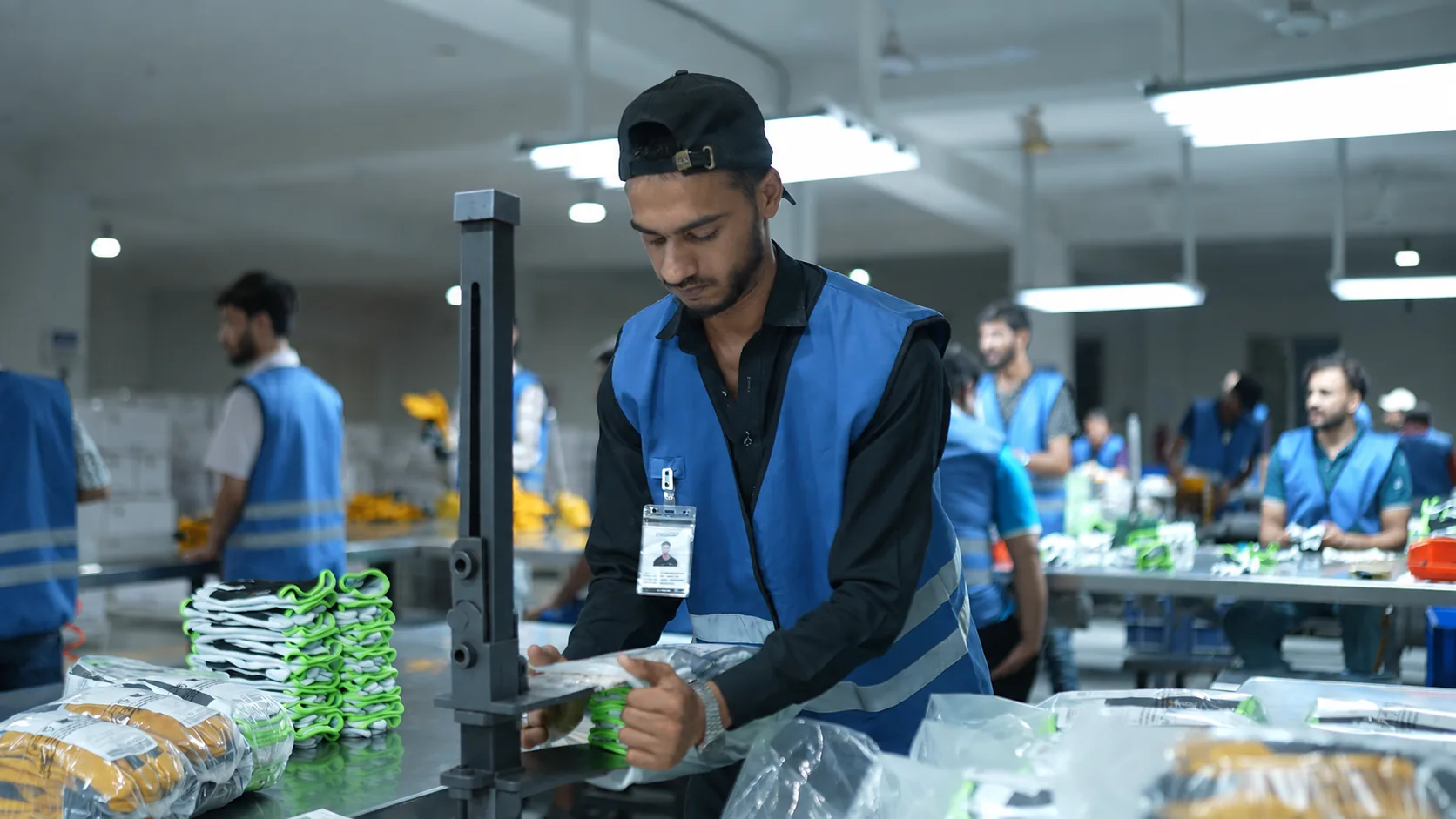
During component assembly and semi-finishing, critical components and panels including reinforcements, padding, and brand identifiers are assembled with high precision using a combination of automatic sewing machines and skilled operators.
This stage ensures structural integrity and accurate placement of functional and branding elements, including printed and sewn-in logos. Integrated quality checkpoints validate each piece's stitch consistency, and component positioning, ensuring that all sub-assemblies meet required standards to proceed in production.
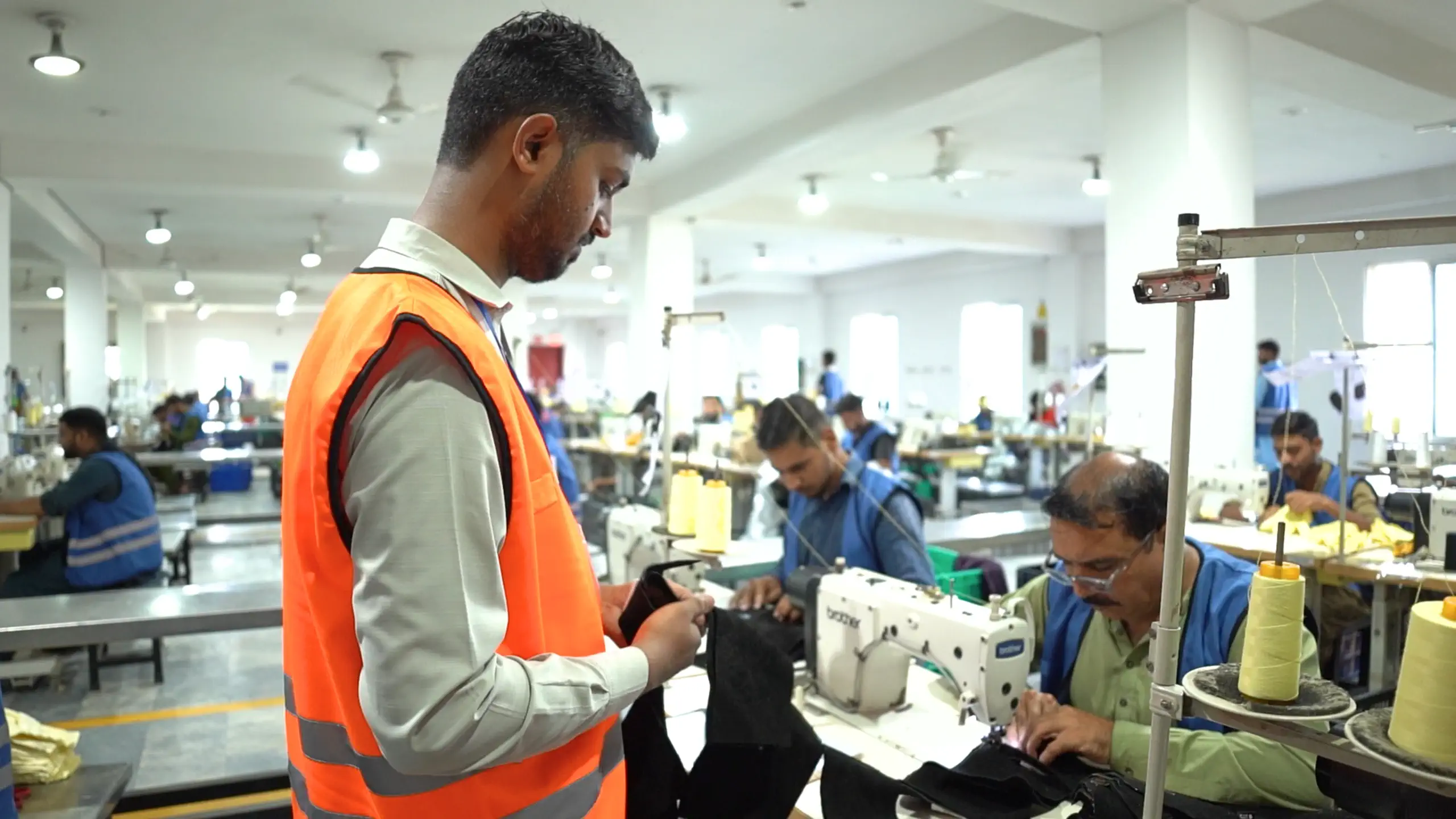
We operate a combination of lean and semi-lean sewing systems, designed to balance flexibility in product types with high-efficiency output. Our sewing operations are executed by skilled operators and supported by inline quality control systems that continuously monitor critical parameters such as SPI, seam allowance, and construction accuracy in real time.
This integrated control environment enables immediate detection and correction of deviations, ensuring consistent workmanship, optimized overall equipment effectiveness (OEE), and sustained high throughput without compromising product quality.
Our finishing process is initiated with gloves moving through in wall installed metal detector, towards the needle free finishing zone followed by a rigorous, multipoint quality assessment to ensure each product meets defined specifications and premium acceptance standards.
This evaluation encompasses stitch integrity, construction accuracy, and material quality, ensuring full conformity prior to dispatch. Products undergo trimming, compressed air cleaning, and detailed visual inspection.
Each carton is subjected to AQL final inspection before final packaging. Finished goods are then stored in a humidity controlled environment, ready to be dispatched.
At Emblon, quality is paramount and embedded across every function, process, and individual. It is treated not as a checkpoint, but as an absolute requirement governing every decision and investment.
Our quality management system is built on disciplined operational control and advanced process governance, and continuous improvement principles. Supported by ISO 9001 certification, structured RACI accountability frameworks, robust NPI procedures, in-house testing infrastructure, and stage wise inspection protocols.
 01
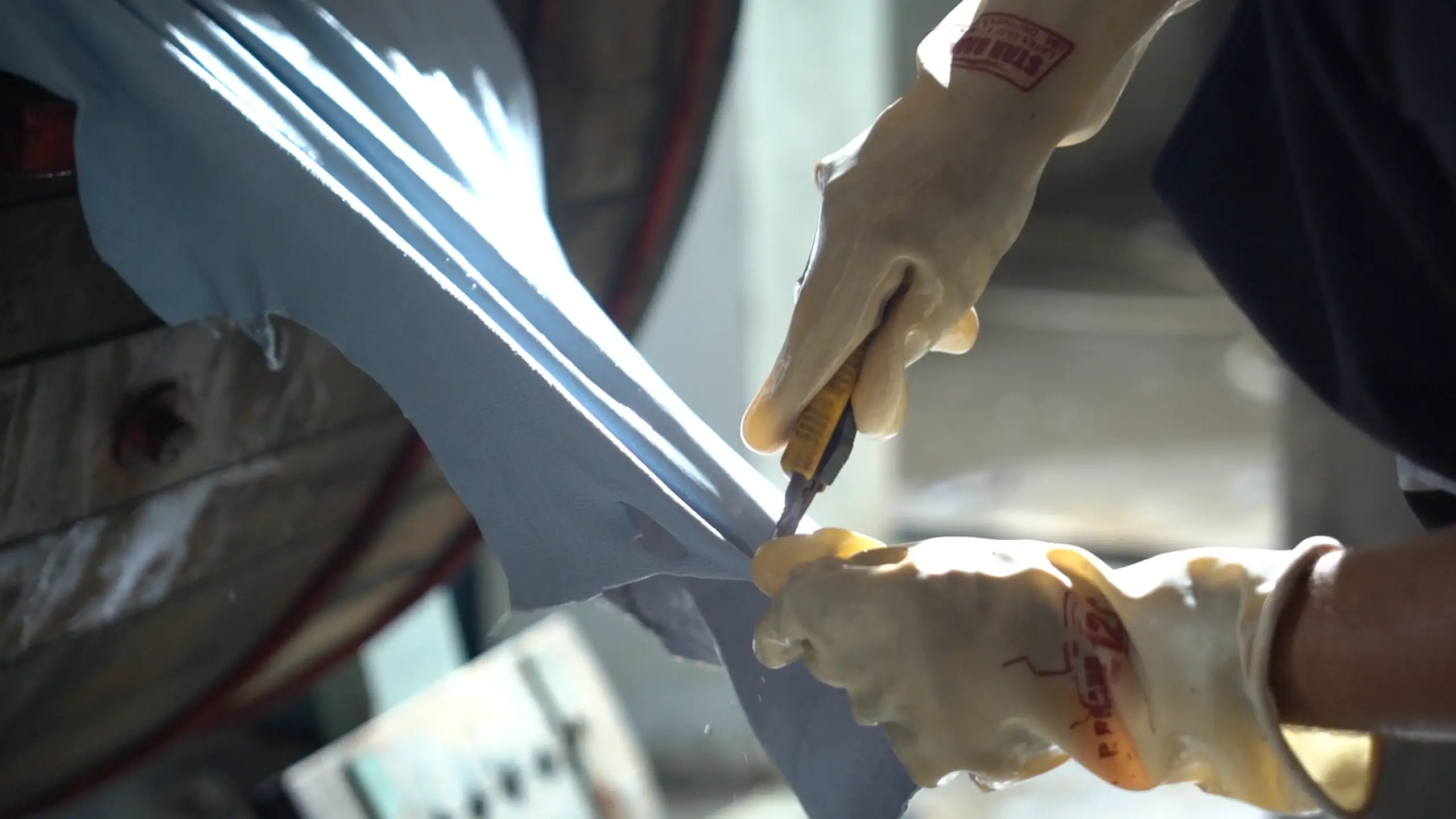
01All leather is tanned with 6% chromium. Retanning and dyeing are performed using directly imported chemicals from our longstanding European supply partners.
 02
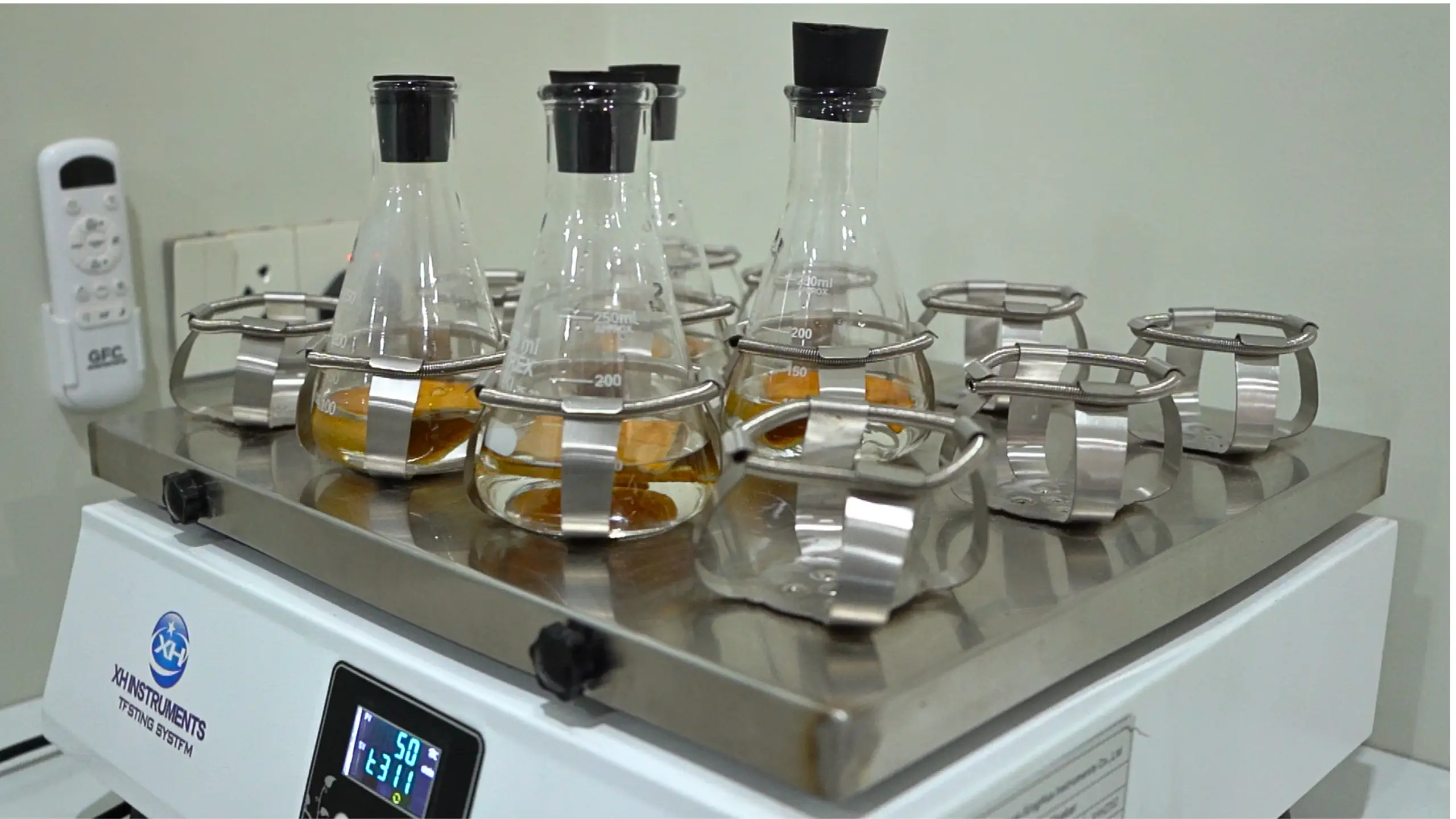
02Each lot produced is tested in our in-house leather laboratory for pH verification, Chromium VI aging, and color fastness. pH value is tested using ISO 4045:2018, Chromium VI using ISO 10195:2018 and ISO 17075:2017, and color fastness using ISO 11640:2018.
 03
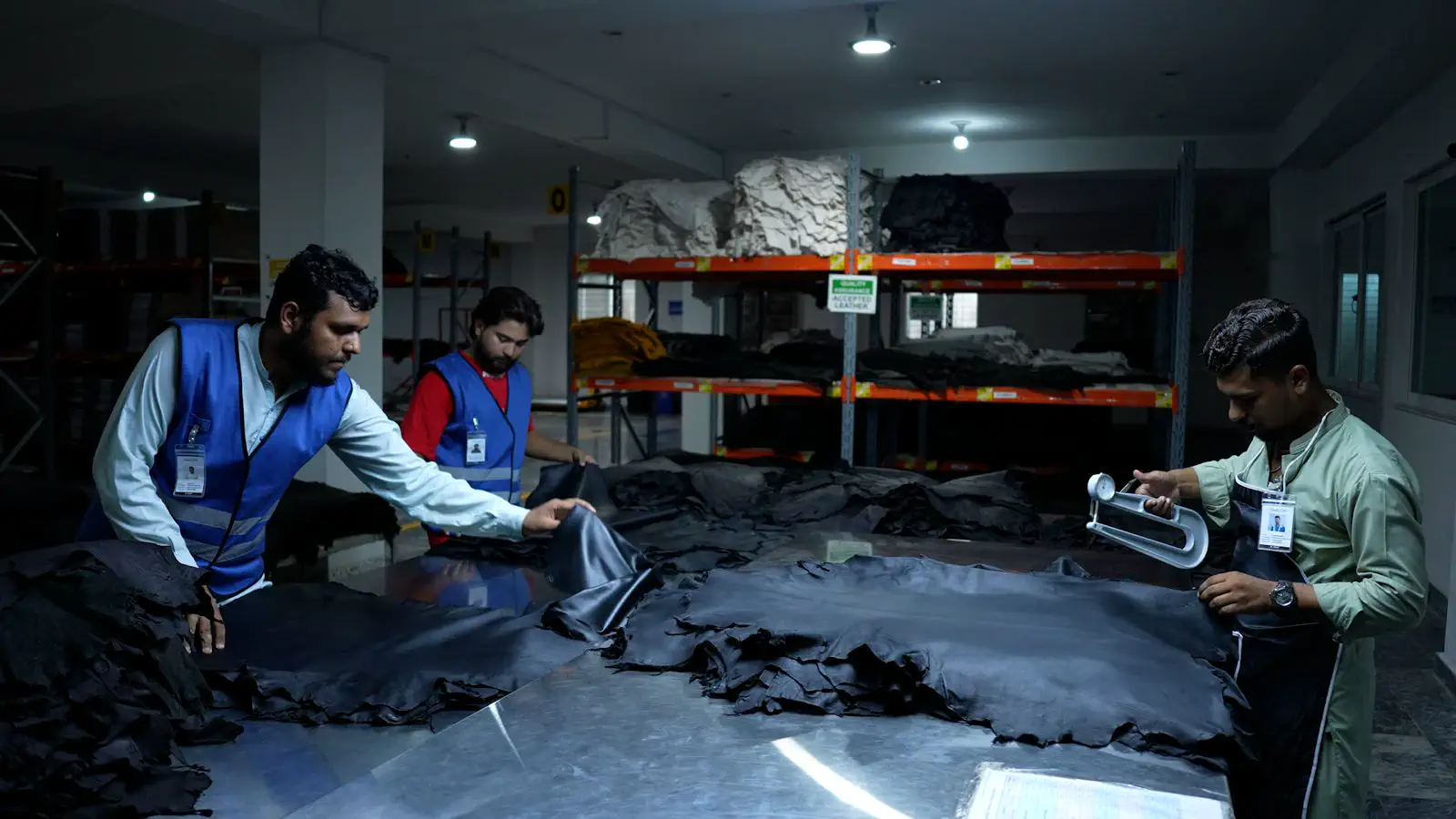
03All lots are inspected and sorted at the tannery, then reinspected and sorted at the C&S unit before cutting. This double-inspection approach significantly reduces non-conforming leather consumption. These processes follow strict SOPs for leather grading, defect types, and defect concentration.
 04
04All materials received are inspected using AQL level 2.5, and dyed materials are tested for AZO-free compliance using EN ISO 14362-1:2017. Each fabric packing is tested for GSM verification and color accuracy. Technical materials are also tested in-house to validate required mechanical and physical performance.
 05
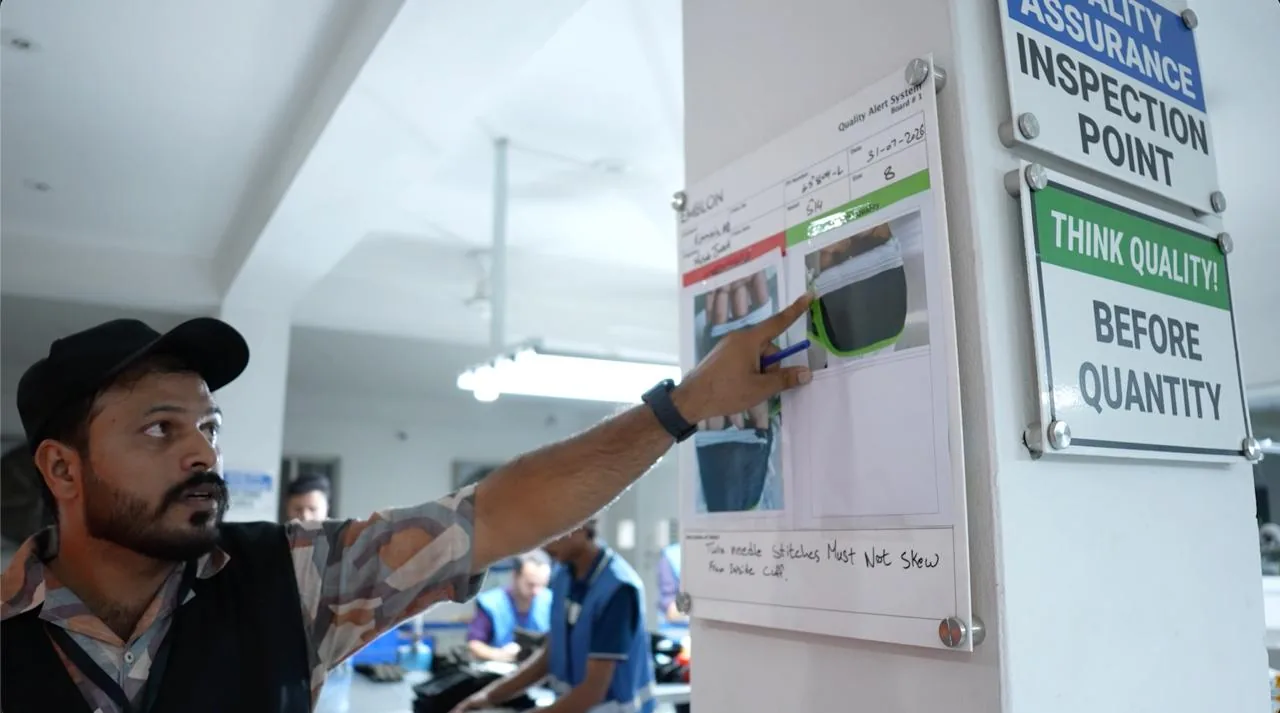
05Quality deviations demand immediate action. Our Quality Alert System empowers any employee to immediately escalate a quality concern. Upon identification of a non-conformity, an audible alert is activated that mobilizes quality and production teams to conduct root cause analysis, implement containment, corrective actions, and authorization to resume production.
 06
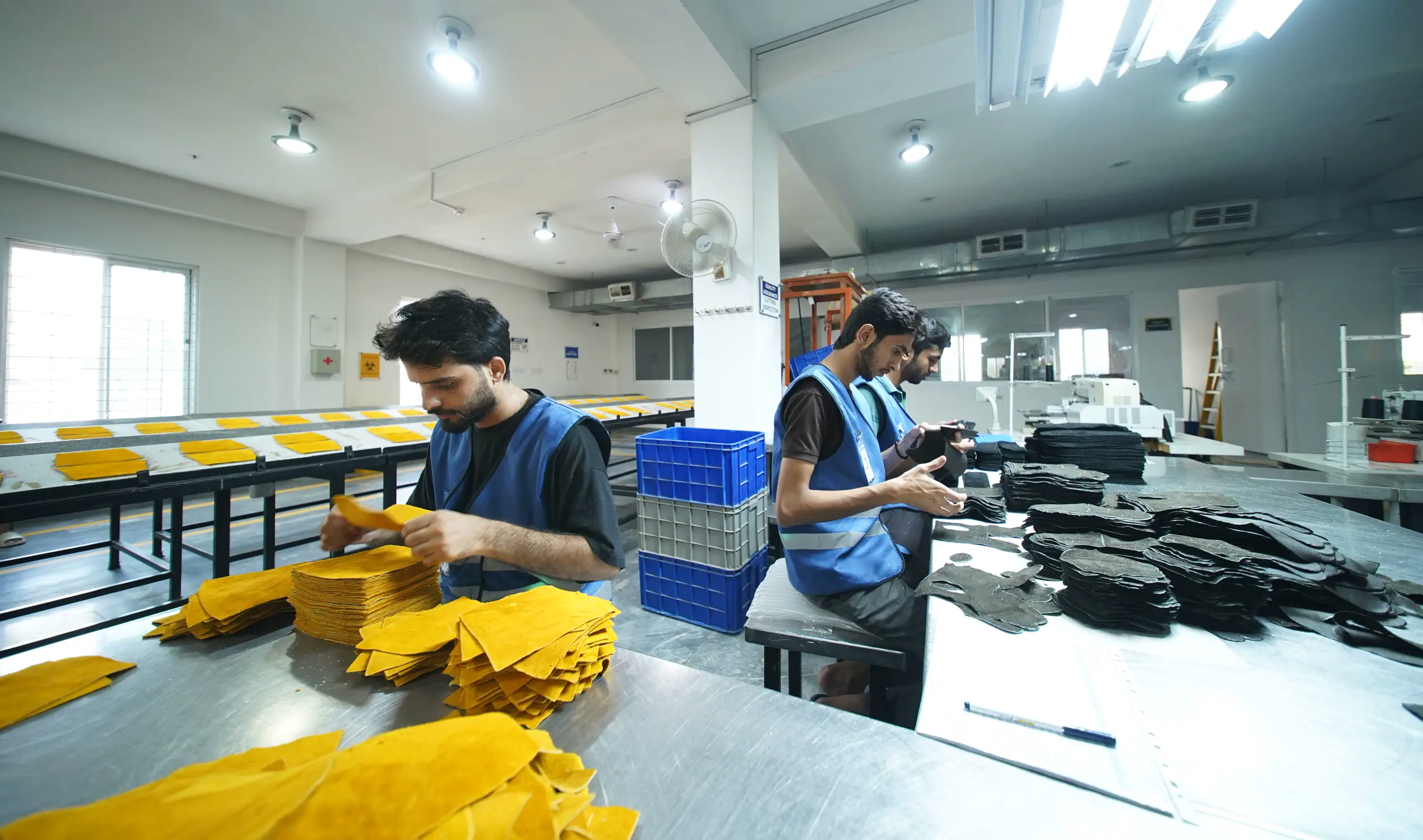
06Every leather, technical, and non-technical component is inspected for conformity after cutting, while semi-finished assemblies are inspected before sewing issuance. All defect types and quantities are recorded for corrective action and KPI monitoring, helping ensure the integrity of brand identifiers.
 07
07Before sewing begins, each machine is configured to the correct stitches per inch (SPI) required for the planned product, with configuration repeated every four hours. A dedicated in-line team continuously inspects sewing against floor-available mock samples. Defect codes streamline corrective-action data collection and KPI monitoring.
 08
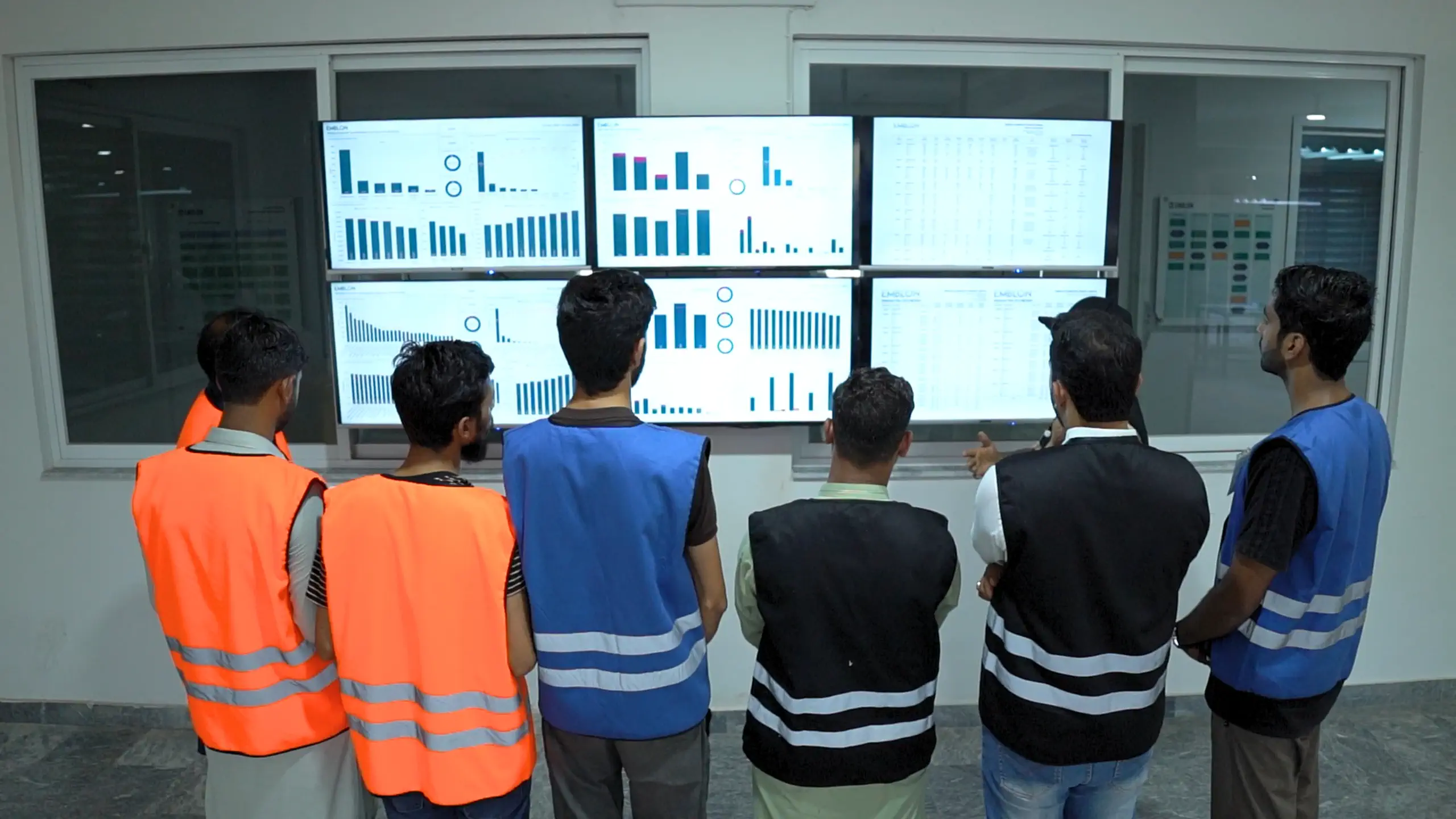
08Operational data is used to calculate employee productivity, overall equipment efficiency, first-pass yield, and Pareto analysis of defects. Delivery data is analyzed to monitor OTD, OTIF, and customer-order performance. This structure enables continuous monitoring and improvement of production performance.
Emblon eliminates compromises in your production. The system is tailored to the needs of each customer and their products, that is further improved upon with systemetic validations.
Costly, fragmented supply chain
Outdated production systems
Inconsistent output
Unreliable high volume management
For our clients this means: Uniform product quality throughout. Industry leading On-Time Delivery rates. Sustainable new developments. Continuous material alignment with REACH and ZDHC compliance.
Unified production system
Continuous system improvements
Strategically consistent output
Experienced volume scaling